Sosoactive Education: Transforming Modern Learning Approaches
Introduction
In today’s fast-changing digital world, education is no longer limited to traditional classrooms. Instead, new learning models are emerging that focus on engagement, activity, and adaptability. One such evolving concept is sosoactive education, which is reshaping how learners interact with knowledge. From the very beginning, sosoactive education emphasizes participation rather than passive memorization, making learning more dynamic and meaningful.
Moreover, as technology continues to evolve, students and educators are searching for methods that are more flexible and interactive. Therefore, sosoactive education is gaining attention as a powerful approach that combines social interaction, activity-based learning, and modern tools to enhance understanding. In addition, this approach encourages learners to become active participants in their educational journey.
Meaning of Sosoactive Education
To understand the concept clearly, it is important to break down its foundation. Sosoactive education refers to a learning system that integrates social interaction with active engagement. Rather than focusing only on theoretical instruction, it encourages students to learn through collaboration, participation, and practical experience.
Furthermore, sosoactive education is designed to improve critical thinking and problem-solving skills. Students are not just listeners; instead, they become contributors in the learning process. As a result, they retain knowledge more effectively and apply it in real-life situations. In essence, this model shifts education from passive learning to active involvement.
Benefits of Sosoactive Education
One of the major advantages of sosoactive education is improved engagement. When learners are actively involved, they are more likely to stay focused and motivated. Consequently, this leads to better academic performance and deeper understanding of subjects.
Additionally, Interactiva enhances communication and teamwork skills. Since students often work in groups, they learn how to share ideas, listen to others, and solve problems collectively. This not only improves academic learning but also prepares them for real-world challenges.
Another important benefit is adaptability. Because Interactiva encourages flexible learning methods, students can learn at their own pace while still participating in group activities. Moreover, it supports different learning styles, making education more inclusive.
Finally, this approach boosts creativity. As learners are encouraged to explore and interact, they develop innovative thinking skills. Therefore, sosoactive education plays a crucial role in shaping well-rounded individuals.
Methods Used in Sosoactive Education
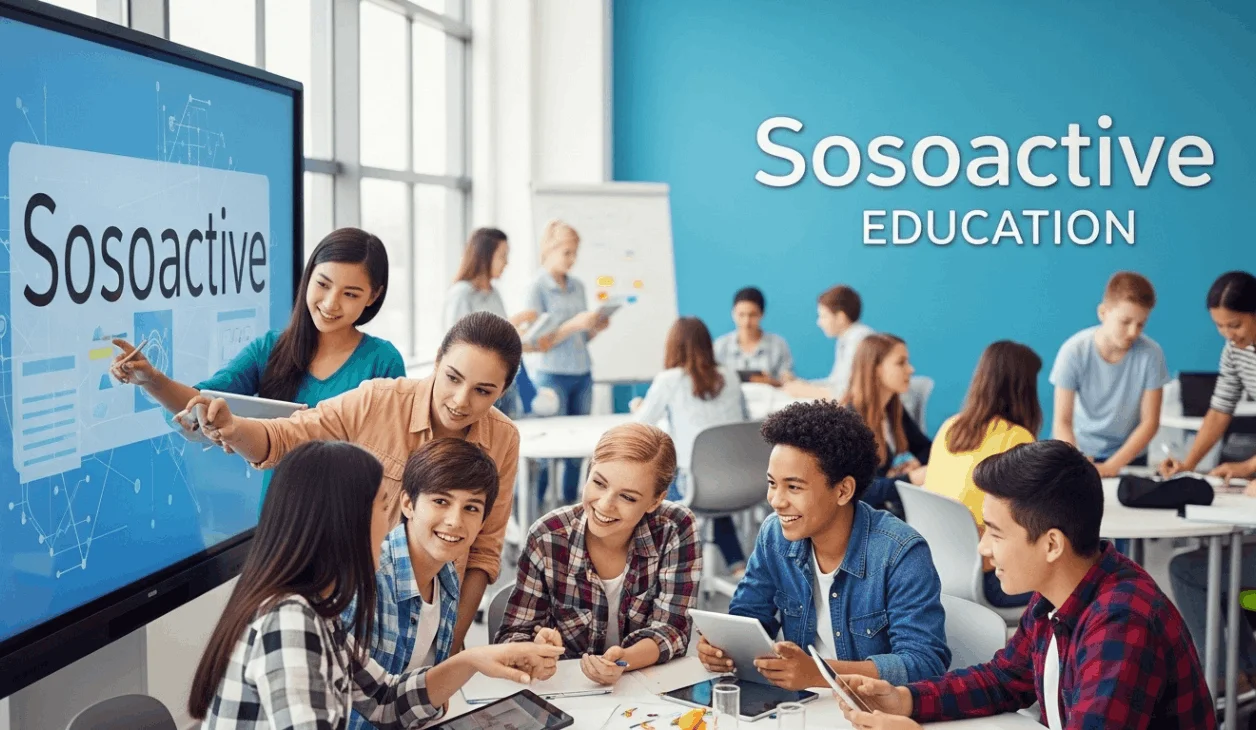
There are several methods used to implement sosoactive education effectively in modern classrooms. One common method is collaborative learning, where students work together on projects and assignments. This encourages discussion and helps them learn from one another.
In addition, interactive digital tools play a significant role. With the help of online platforms, virtual classrooms, and educational apps, Interactiva becomes more engaging and accessible. These tools allow students to participate in quizzes, discussions, and simulations in real time.
Moreover, activity-based learning is another key method. Instead of only reading textbooks, students engage in experiments, role-playing, and hands-on activities. As a result, Interactiva becomes more practical and effective.
Teachers also act as facilitators rather than traditional instructors. They guide students, encourage participation, and create an environment where learning becomes a shared experience. Consequently, students feel more confident and involved in their studies.
Challenges in Sosoactive Education
Despite its many benefits, sosoactive education also faces certain challenges. One major issue is the lack of resources in some educational institutions. Without proper technology and infrastructure, it becomes difficult to fully implement this model.
Furthermore, some educators may find it challenging to adapt to this new teaching style. Since Interactiva requires a shift from traditional methods, training and support are essential for successful implementation.
Another challenge is maintaining balance between activity and academic structure. While interaction is important, too much distraction can reduce learning efficiency. Therefore, careful planning is required to ensure that Interactiva remains effective and focused.
Future of Sosoactive Education
Looking ahead, the future of sosoactive education appears very promising. With advancements in artificial intelligence, virtual reality, and online learning platforms, this educational model is expected to become even more powerful and widespread.
In the coming years, more schools and universities are likely to adopt Interactiva as a core teaching method. This will help create a more engaging and student-centered learning environment. Additionally, continuous innovation in digital tools will further enhance its effectiveness.
Moreover, as global education systems evolve, the demand for interactive and skill-based learning will increase. Therefore, Interactiva will play a key role in shaping the future of learning worldwide.
Conclusion
In conclusion, sosoactive education represents a major shift in how knowledge is delivered and absorbed. It moves away from traditional memorization-based systems and focuses on interaction, collaboration, and active participation. As a result, students become more confident, creative, and capable learners.
Ultimately, sosoactive education is not just a method but a transformation in the learning experience. With its ability to adapt to modern needs and technologies, it is set to become a cornerstone of future education systems.